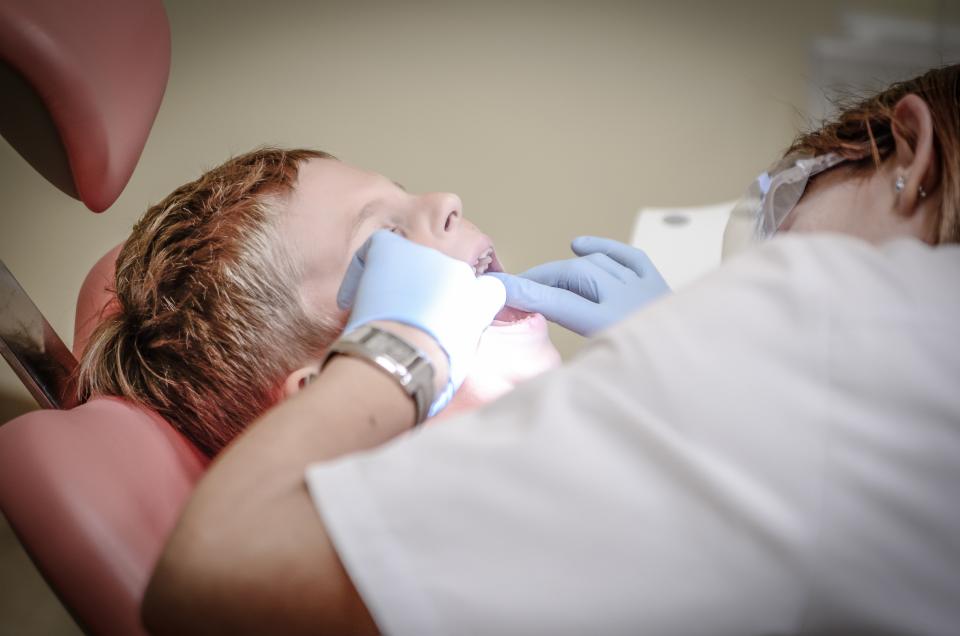
Root canal treatment removes infection from inside a tooth, then cleans, fills and seals it so the tooth can be kept rather than pulled out. On the NHS it usually takes two or more appointments of about one to two hours each, is done under local anaesthetic, and in England counts as a Band 2 course of treatment (£76.60), or Band 3 (£332.10) if you also need a crown.
How we put this guide together: the clinical and cost information comes from NHS guidance on root canal treatment and NHS dental charges in England. The practice example uses only what the practice publishes on its own website, checked in October 2026. It is a worked example, not a recommendation or a rating.
Being told you need a root canal can sound alarming, but it is one of the most common ways dentists save a tooth that would otherwise have to come out. As an example of how a local practice describes the process, Abbey Dental Practice in Walthamstow sets out each stage on its website, from the anaesthetic to the permanent filling. This guide explains the same journey in plain English: why the treatment is needed, what each visit involves, how you might feel afterwards and what it costs.
Why would a tooth need root canal treatment?
Inside every tooth is a soft core called the pulp, which contains nerves and blood vessels. The NHS explains that the pulp can become infected through:
- tooth decay
- gum disease
- a chipped, broken or cracked tooth
- a dental abscess
Once the pulp is infected, it cannot heal on its own. The usual sign is tooth pain caused by the infection, and your dentist will confirm what is going on with an examination and, where needed, an X-ray. If the infection is left, it can spread and lead to an abscess, which is why dentists generally treat it sooner rather than later.
The NHS is clear about the alternative: if an infected tooth is not treated, it may need to be removed. Root canal treatment is therefore usually a choice between keeping the tooth or losing it, rather than a cosmetic extra.
What happens during treatment, step by step
Treatment is usually carried out under local anaesthetic, so the tooth and the area around it are numb. According to the NHS, the dentist will:
- Make a small opening in the tooth to reach the pulp.
- Remove the infected pulp and drain any abscess.
- Clean and shape the inside of the tooth, including the narrow root canals.
- Fill and seal the tooth to stop infection coming back.
Because the canals need to be thoroughly cleaned, the work is often split across visits. The NHS says root canal treatment usually needs two or more appointments, each lasting about one to two hours or sometimes longer. Between visits, the tooth is protected with a temporary filling.
Practices describe the same stages in their own words. Abbey Dental Practice's page, for example, lists local anaesthetic, accessing and cleaning the canal system, a temporary seal, and then a later visit where the tooth is checked and permanently filled once the infection has cleared. Its page also says patients can generally drive home afterwards unless they have been sedated.
| Stage | What usually happens | What to expect |
|---|---|---|
| Assessment | Examination and X-rays if needed; the dentist explains the options and costs | A treatment plan, and a choice between NHS or private care if the practice offers both |
| First treatment visit | Local anaesthetic, infected pulp removed, canals cleaned, temporary filling placed | About 1 to 2 hours in the chair; numbness for several hours afterwards |
| Between visits | The tooth settles with a temporary filling | Avoid chewing hard food on that side; some soreness is common |
| Final visit | Canals filled and sealed; permanent filling, or a crown if the tooth needs extra protection | Another longer appointment; your dentist may book a follow-up check |
Does it hurt, and how will I feel afterwards?
The anaesthetic means you should not feel pain during the treatment itself, although you will feel some pressure and hear the instruments. Afterwards, the NHS says:
- Numbness in your jaw and face can last several hours, so take care not to bite your cheek or tongue, and avoid very hot drinks until the feeling returns.
- The area may be swollen and sore, and this usually gets better within a couple of weeks.
- Paracetamol or ibuprofen can help with the pain, as long as they are suitable for you. Check the leaflet or ask a pharmacist if you are unsure.
- Try not to bump or knock your mouth while it heals, and go to your follow-up appointments.
Until the permanent filling or crown is in place, it makes sense to avoid chewing on the treated tooth, as the temporary filling is not designed for heavy biting. If pain gets worse rather than better, or swelling spreads, contact your dentist.
Will I need a crown?
Not always. The NHS says a crown may be needed if the tooth was badly infected. A tooth that has lost a lot of its structure to decay, or that is a back tooth taking heavy chewing forces, is more likely to need one, because the crown covers and protects what is left.
Ask your dentist at the planning stage whether a crown is likely, because it changes both the number of appointments and the cost.
How much does root canal treatment cost on the NHS?
In England, NHS dental treatment is charged in bands, and you pay one charge for the whole course of treatment, at the highest band involved. These are the charges from 1 April 2026:
| NHS band | Charge | How it applies to root canal treatment |
|---|---|---|
| Urgent | £27.90 | Urgent care can include emergency partial root canal treatment, draining an abscess and a temporary filling |
| Band 1 | £27.90 | The examination, diagnosis, advice and X-rays if needed |
| Band 2 | £76.60 | Root canal treatment, along with everything in Band 1 |
| Band 3 | £332.10 | Applies if the course also includes a crown |
Two rules are worth knowing. First, if you need further treatment within 2 months of finishing a course and it is in the same or a lower band, there is no extra charge. Second, some people get NHS dental treatment free, including under-18s, under-19s in full-time education, pregnant women and those who have had a baby in the last 12 months, and people receiving certain benefits. Others on a low income may get help through the NHS Low Income Scheme.
The NHS also notes that root canal treatment may be offered privately if you choose. Private practices set their own fees, so ask for a written estimate before you agree to anything. Your dentist should tell you which parts of your treatment are NHS and which, if any, are private.
When is it urgent?
Most root canal problems are handled by your own dentist, but some situations need faster help. If you have bad toothache, swelling or an infection and cannot get an appointment, use NHS 111 online or call 111 to find urgent dental care. Go to A&E or call 999 if you have:
- bleeding from your mouth that will not stop
- a serious injury to your face, mouth or jaw
- swelling in your mouth or neck that is making it hard to breathe or swallow
How long does a root-filled tooth last?
A root-filled tooth can last for many years with good care, but nothing is guaranteed. Abbey Dental Practice's page says treatment can occasionally fail if canals were not fully cleaned or sealed, or if a new infection develops, and that retreatment or a small surgical procedure called an apicoectomy may then be needed. The best protection is the same daily routine that protects all your teeth: brushing twice a day with fluoride toothpaste, cleaning between your teeth, keeping sugary food and drinks to mealtimes and keeping up the check-ups your dentist recommends.
Questions to ask your dentist
- Is the tooth likely to be saved, and what happens if I choose not to have treatment?
- How many appointments will I need, and how long will each take?
- Will I need a crown, and what will that add to the cost?
- Is this being done on the NHS, privately, or a mix of both?
- What should I do if the pain gets worse between visits?
Frequently asked questions
How many visits does a root canal take?
The NHS says it usually takes two or more appointments, each lasting about one to two hours or sometimes longer. A temporary filling protects the tooth between visits.
Is root canal treatment available on the NHS?
Yes. It is a Band 2 NHS treatment in England, costing £76.60 from 1 April 2026, or Band 3 (£332.10) if a crown is also needed. Some people are entitled to free treatment.
Can I go back to work after a root canal?
Many people can, although your mouth will be numb for several hours and may feel sore afterwards. If you have had sedation, you will need someone to take you home.
Is having the tooth out a better option?
Extraction is the main alternative, but it leaves a gap that may later need a bridge, denture or implant. Ask your dentist to explain the pros and cons of each option for your particular tooth.
Sources
- NHS: Root canal treatment
- NHS: Understanding NHS dental charges
- NHS: Get help with dental costs
- NHS: How to find an emergency or urgent dentist
- NHS: Take care of your teeth and gums
General information only, not dental advice. Always follow the advice of your own dentist, and check current NHS charges before treatment.